In this guide
The Medela Symphony is a hospital-grade double electric pump often used to build or maintain milk supply. Here is how to set it up and use it, step by step.
Before you start, wash your hands and make sure every part that touches your milk is clean and fully dry.
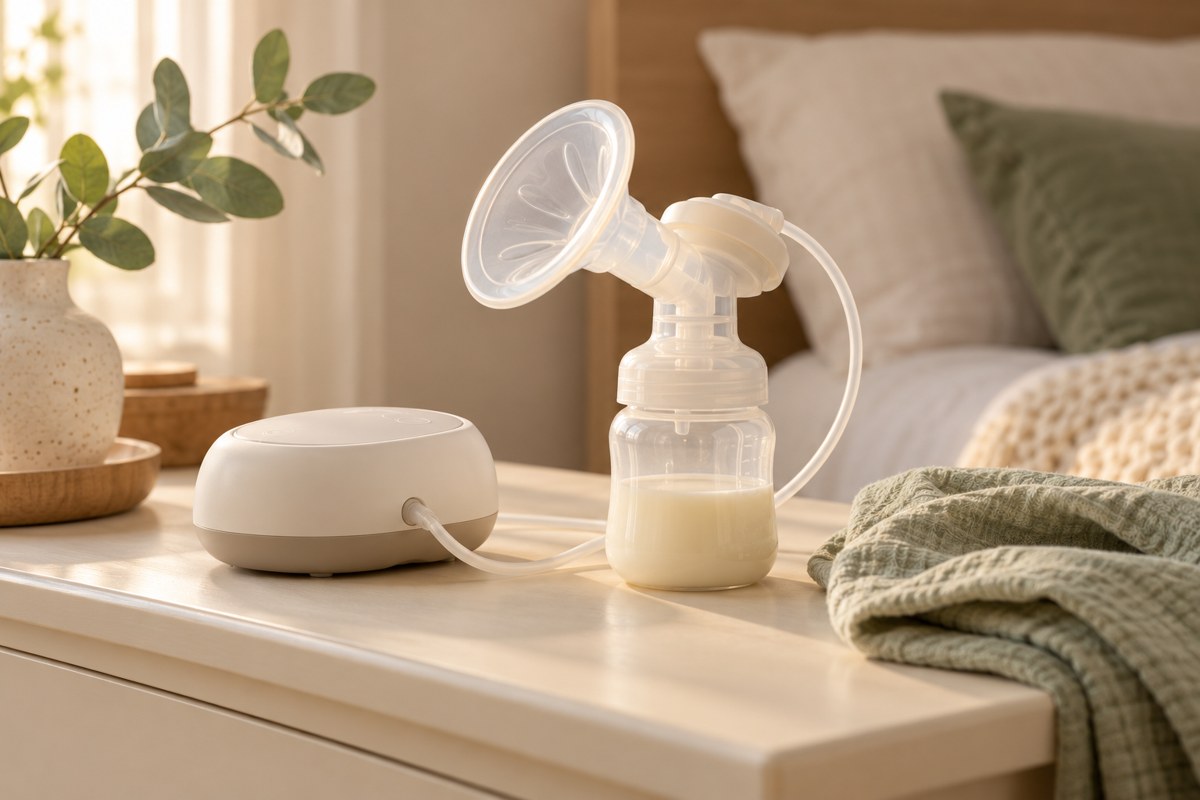
Set up the pump kit
- Attach the breast shields to the connectors.
- Fit a valve and membrane onto each connector.
- Screw a collection bottle under each connector.
- Plug the tubing into the connectors and into the pump's port.
- Insert the Symphony program card if your model uses one, then plug the pump into power.
Position and start
- Center each shield so your nipple moves freely in the tunnel.
- Turn the pump on and let it run through its let-down phase.
- Raise the suction only to the highest level that is still comfortable. Stronger is not more milk.
- Pump for about 15 to 20 minutes, or 2 to 5 minutes past your last drops.
Flange fit matters most
If pumping pinches or your nipple rubs the sides of the tunnel, the flange size is usually wrong. Too small pinches the nipple; too large pulls in the areola. A lactation consultant can measure you, or you can size at home with a printable flange guide.
What to ask your provider
- Can you check my flange fit and pump setup?
- What pumping routine fits my baby’s needs and my circumstances?
- When should pain or a change in output prompt a call?
Sources & further reading
Gear that helps
Amazon affiliate links. As an Amazon Associate I earn from qualifying purchases.
Common questions
How long should I pump with the Symphony?
Most parents pump about 15 to 20 minutes, or a few minutes past the last drops. Follow your own provider's plan if you were given one.
Why am I not getting much milk?
Check flange fit first, make sure the membranes are not torn, and keep suction comfortable rather than high. Output also varies by time of day.
General information, not medical advice. Ask your pediatrician or a lactation consultant.