In this guide
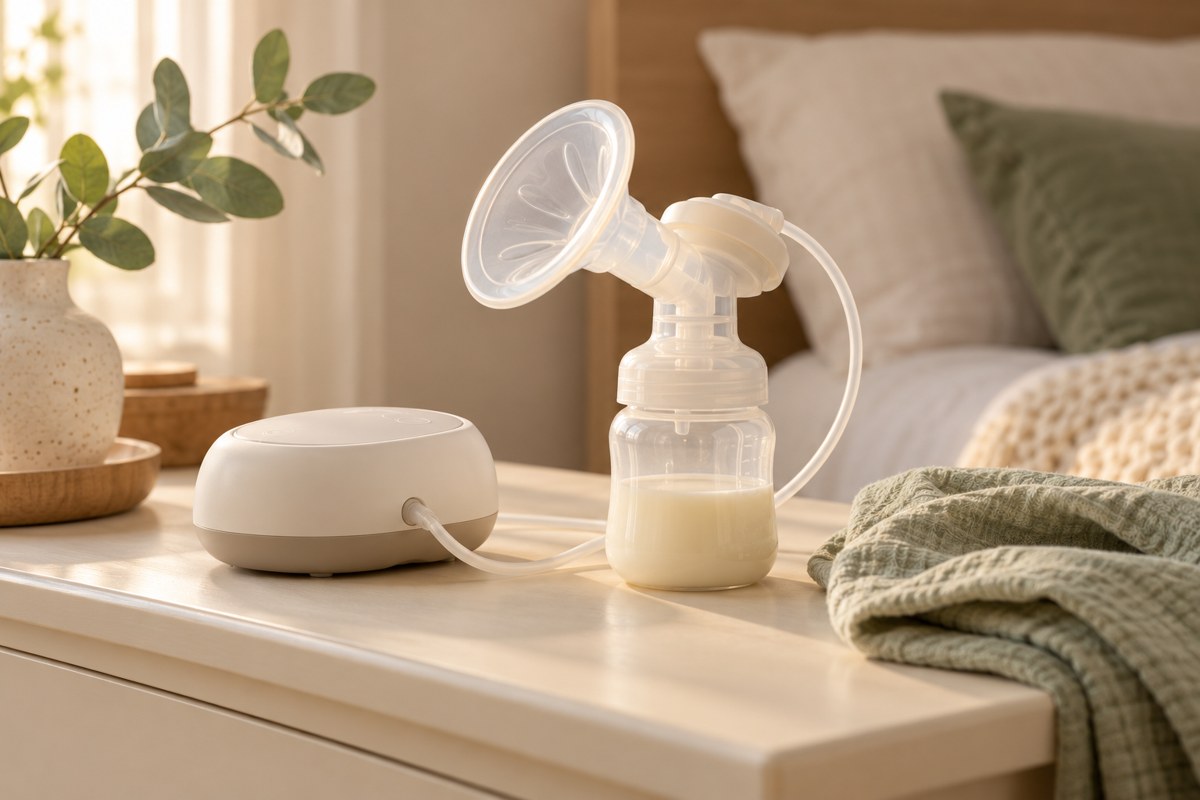
A breast pump lets you collect milk to feed later, build a supply, or relieve fullness. The steps are nearly the same across most electric pumps. Here is the simple version.
Wash your hands and use clean, dry parts every time.
The basic steps
- Assemble the kit: shields, valves and membranes, bottles, and tubing.
- Center your nipple in each shield.
- Start on a low, fast rhythm to trigger let-down, then switch to slower, stronger pulls.
- Keep suction at the highest comfortable level, never painful.
- Pump 15 to 20 minutes, then cap and refrigerate the milk right away.
Get comfortable
- Lean back slightly and relax your shoulders.
- A warm compress or gentle massage before pumping can help let-down.
- Look at a photo or video of your baby if milk is slow to start.
Check fit and the whole feeding picture
Flange fit is one factor in comfortable pumping. If pumping hurts or output is unexpectedly low, check the setup with a lactation consultant and discuss feeding or growth concerns with your baby’s clinician. Do not assume a different flange will solve every problem.
What to ask your provider
- Can you check my flange fit and pump setup?
- What pumping routine fits my baby’s needs and my circumstances?
- When should pain or a change in output prompt a call?
Sources & further reading
Gear that helps
Amazon affiliate links. As an Amazon Associate I earn from qualifying purchases.
Common questions
How often should I pump?
To build or keep a supply, many parents pump about 8 times in 24 hours, or whenever they would normally feed. Your provider can tailor this to you.
Does pumping hurt?
It should not. Pain usually means the flange is the wrong size or the suction is set too high.
General information, not medical advice. Ask your pediatrician or a lactation consultant.